
Are we in a 'Sandwiched' Society?
In 2026, it’s starting to feel like everyone is part of the sandwich generation.
A few weeks ago a headline came across my screen and I’ve been thinking of it ever since. It read:
About 1 of every 13 Minnesotans - including more than 152,000 children and 72,000 seniors, according to the state - receive SNAP benefits…Counties and nonprofits across the state are scrambling to help low-income families in what advocates are calling an unprecedented crisis.
What keeps popping into my mind though is this idea that we, as a society, are in the Sandwiched Generation. In 2026, it’s starting to feel like everyone is part of the sandwich generation. The squeeze has gone universal. It doesn’t feel like a specific demographic anymore, but rather the shape of modern life.
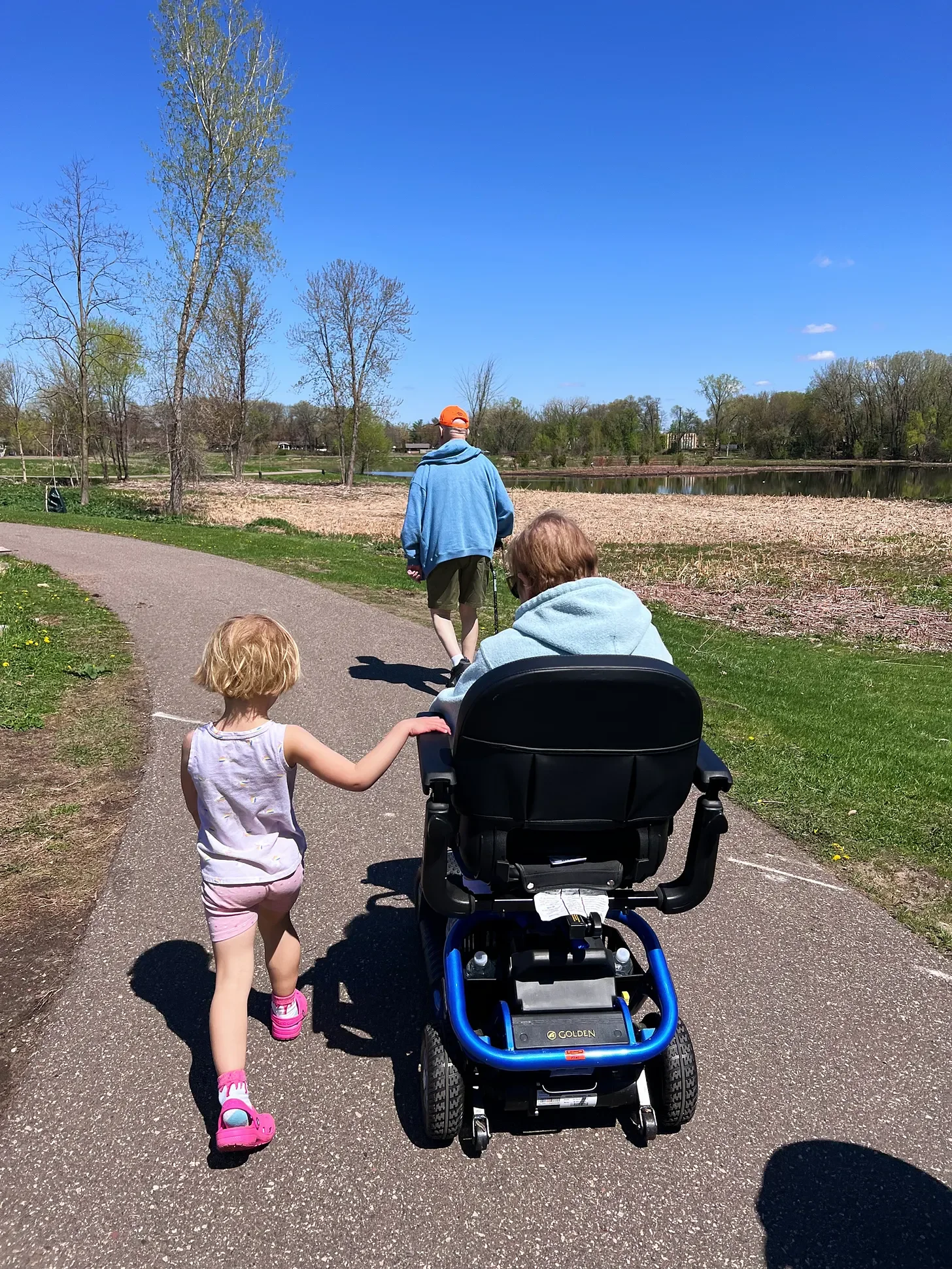
This is a great day - when everyone can get outside. Sometimes this view is out and about in the sunshine and sometimes it’s in the hallway of the ER. Every day is completely different and unknown when your ‘sandwiched’.
Yes, we have always needed to care for our young and old, but right now, at this specific place and time, our care system in America is more fragile than ever. And frankly, it’s up to us in the middle to do something about it - and it’s something we all need to pay attention to. Not only for our care as millennials as we age in the future but for our children’s generation as well.
According to the Pew Research Center, 1/4 of American adults are now in The Sandwich Generation. Our loved ones are living longer and like me, have waited until later in life to have children. On top of that, there is a wave of Boomers aging with approximately 10,000 people turning 65 years old each day in America - with the peak coming in 2027.
Even if you are not ‘sandwiched’, the numbers show that our society, our culture as a whole right now is. If we’re all part of the sandwich generation, then care itself becomes a shared social responsibility. Instead of framing caregiving as a private struggle, it can be seen as a collective endeavor. That means rethinking how we support one another: through better family leave policies, affordable healthcare, mental health resources, and community care systems.
Since I have been caregiving for my parents, my eyes have been opened to so much. The hospitals are always full, the cost of care is enormous (this includes childcare and eldercare) and staffing for hospitals, assisted living, daycare and schools is tricky at best. Turnover is high and the pay is low. Information, assistance and ‘the system’ are incredibly scattered and confusing. And when the cost of food, care and housing are at an all-time high, what is going to give?
To me, it feels like it’s a house of cards that is built on sand and the tiniest whisper of wind is going to have it all come crashing down.
So what are we going to do about it?
I’d like to share some people and organizations who are working day-in-and-day-out to create positive change for our country, state and local community when it comes to care. If everyone’s sandwiched, maybe the issue isn’t the layers — it’s how they’re arranged. What would it look like to design a society that distributes care more evenly? One where childcare, elder care, and mental health support aren’t luxuries, but infrastructure?
Maybe being part of the sandwich generation could mean something new — not exhaustion and quiet resentment, but connection. A recognition that we’re all interdependent, all trying to support one another, and all a little tired of pretending otherwise. Robyn and I have felt this growing sense of connection GREATLY this year with the launch of our podcast. It’s been inspiring and motivating to find ourselves in the world of caregiving advocacy! My hope is by writing this, some more people will become aware, involved, inspired and pay attention to the care crisis we’re all in:
The National Domestic Worker’s Alliance and Caring Across Generations recently went to the House Democrats to discuss why we should be investing more in care, not cutting it. Ai-jen Poo gave an incredible testimony that called for change to:
Raise wages for care workers.
Expand home and community based services for aging and disabled people.
Making childcare more affordable.
Passing a federal paid leave policy.
Lutheran Social Services (in Minnesota) has been truly incredible to my parents, who are on Medical Assistance and live on an incredibly small fixed income along with government waivers. Lutheran Social Services has provided my parents meals after hospital stays, including fresh grocery delivery options. Our family also participates in the ‘Friendly Helper’ program where a companion comes once a week to assist my mother in whatever she needs help with. These programs are a gift to my parents and me too. It lightens the load as their caregiver.
Second Harvest Heartland also provides senior specific grocery help. Located in Brooklyn Park, they are working to fill a hunger demand as this wave of older generation ages.
Our neighbors set up this adorable mini-pantry for people in our neighborhood to simply come and grab food if they are in need. People are using it and people are filling it. It’s an incredible gesture that reminds me that oftentimes big change can happen in a small way.
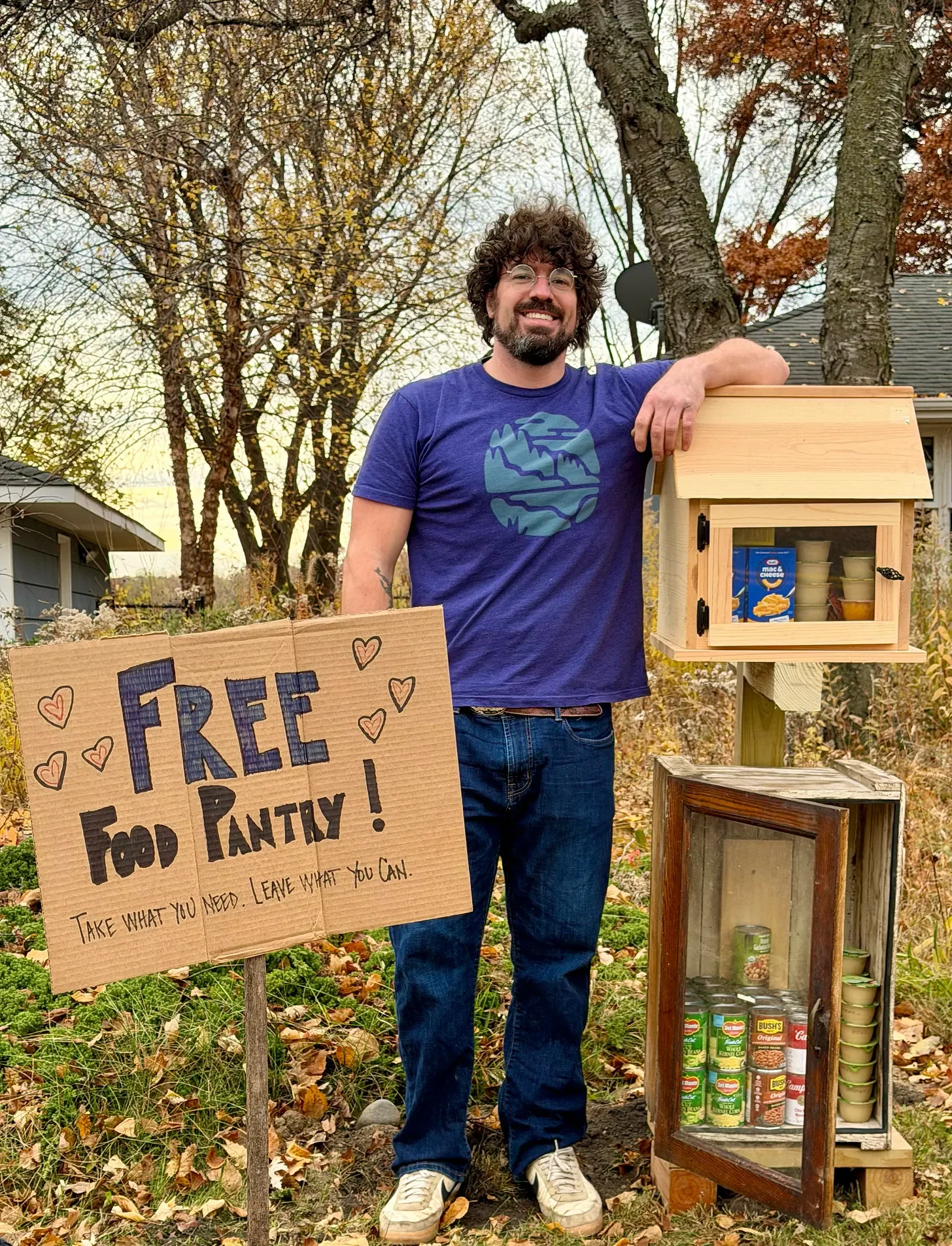
Our neighbors, Monica and Bentley, transformed a Little Library into a Little Pantry - brilliant!
Yes, we need more voices lobbying for better pay, better care and affordable childcare, eldercare and healthcare for us all. This work for change is deeply important. But also, maybe we need a to simply put the smallest ideas into action that will change someone’s life close to home.
A better future starts with us and we’re not helpless in this chaos. We are powerful! And if we want better care when we are older, that mission starts now. Let’s take care of one another, use our voices and support our community. It matters more than we know!
As the holidays approach, many families who are in the Sandwich Generation will need food support. Consider donating or volunteering at one of these organizations:
National Organizations:
Minnesota Based Organizations:
If you’re new here, I cohost a podcast called The Sandwich Generation Pod and along with my friend Robyn Frank. We talk about the realities of raising our young kids alongside caregiving for our aging parents. Season 1 is now fully released and we invite you to listen and share with anyone you know who this might help!
Read More:
See if you qualify for SNAP - AARP
‘What it’s Like to turn 65 in 2024?’ - AARP
‘The Sandwich Generation’ - The Pew Research Center
‘Crisis Point for Caregivers’ - AARP Newsroom
LOVEe + Robyn
